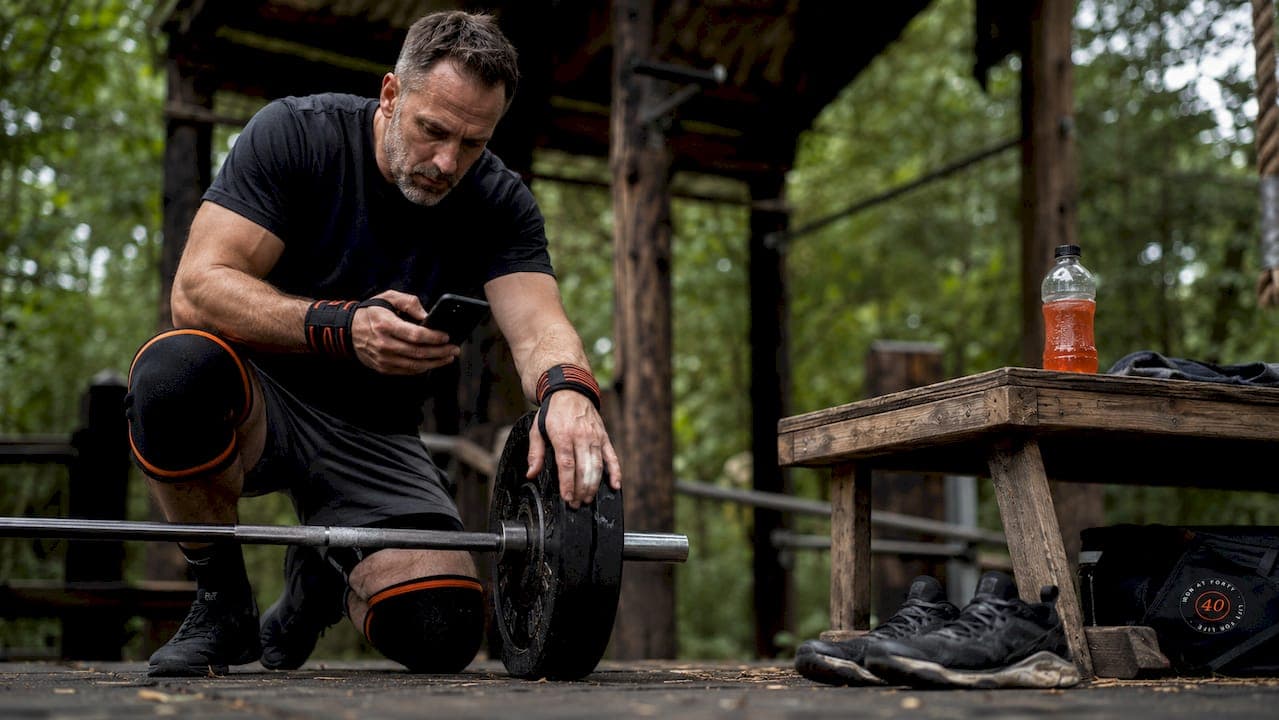
Overreaching is defined as a deliberate, short-term increase in training load that causes temporary fatigue and a planned performance dip. Overtraining is the opposite. It is an unplanned, prolonged state of systemic dysfunction that can sideline you for months. Understanding what is overreaching vs overtraining is not academic. For lifters over 40, getting this wrong means the difference between a productive training block and a forced six-month break. Sports science recognizes three distinct states on this fatigue spectrum, and knowing where you sit on that spectrum determines your next move.
What is overreaching vs overtraining: the three-state spectrum
Sports science does not treat fatigue as a binary. The field recognizes three states: Functional Overreaching (FOR), Non-Functional Overreaching (NFOR), and Overtraining Syndrome (OTS). Each state differs in recovery duration, hormonal impact, and outcome.
Functional overreaching is a planned training tool. You push load above your normal threshold for a short block, performance dips temporarily, and then a recovery phase triggers supercompensation. You come back stronger. That is the goal. Non-functional overreaching happens when the recovery phase is skipped or inadequate. The performance dip extends for weeks to months with no strength gain on the other side. Overtraining Syndrome is the full breakdown. It involves hormonal and nervous system dysregulation, and recovery can stretch from months to years.
The table below summarizes the three states clearly.
| State | Recovery time | Key symptoms | Outcome |
|---|---|---|---|
| Functional Overreaching (FOR) | 1–2 weeks | Temporary fatigue, mild mood dip | Supercompensation, strength gain |
| Non-Functional Overreaching (NFOR) | Weeks to months | Persistent fatigue, mood disturbance | No performance gain, stagnation |
| Overtraining Syndrome (OTS) | Months to years | Systemic dysfunction, hormonal disruption | Forced training cessation |
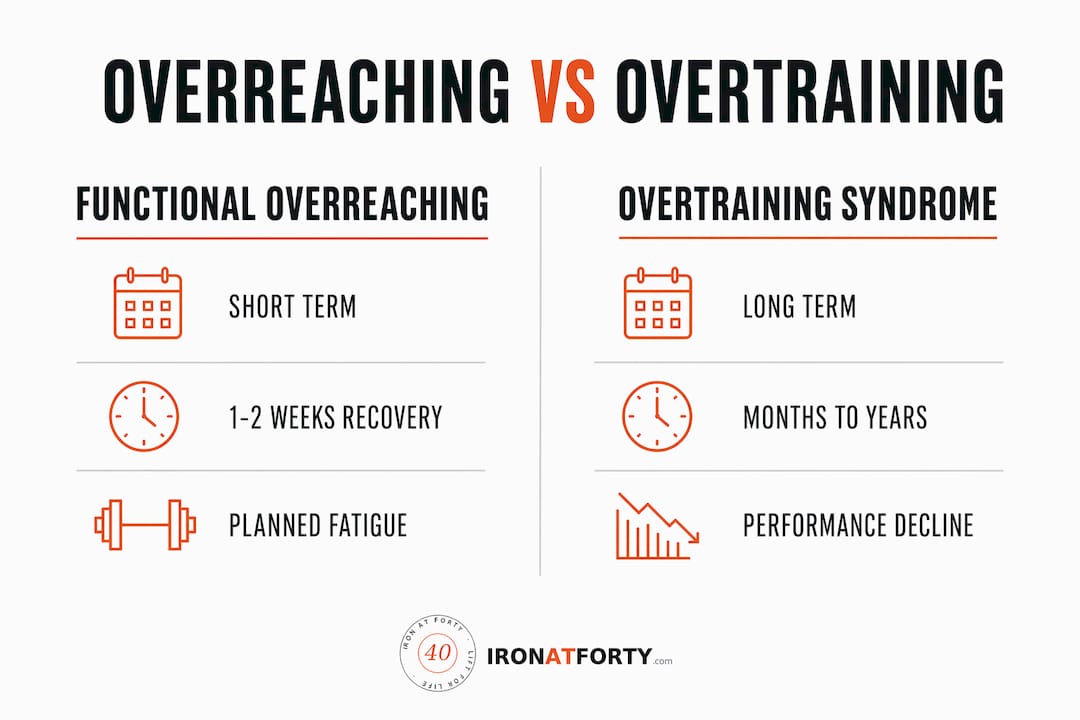
One critical point: no single biomarker reliably distinguishes FOR from NFOR. The European College of Sport Science consensus recommends combining performance tests with subjective wellness data. That means tracking how you feel, not just how much you lift.
How do you recognize the signs of overreaching vs overtraining?
The signs of overreaching and overtraining overlap, which is exactly what makes this hard. The difference lies in timing, severity, and whether the symptoms resolve with a short rest.
Mood changes like irritability and anxiety frequently precede measurable performance drops. This matters because most lifters wait for a bad training session to flag a problem. By then, you are already behind. Catching the mood signal early gives you a chance to deload before NFOR sets in.
Signs of functional overreaching (manageable):
- Mild fatigue that improves after one or two rest days
- Slightly reduced motivation heading into a session
- Performance holds within 5% of your recent baseline
- Sleep quality remains normal or only slightly disrupted
- Mood returns to baseline within a few days of reduced load
Signs of non-functional overreaching or OTS (act now):
- Performance decline lasting more than two weeks despite rest
- Persistent irritability, anxiety, or flat emotional affect
- Resting heart rate elevated 5–7 bpm above baseline for three consecutive days, signaling incomplete recovery
- Resting heart rate elevated 8–15 bpm above baseline, which points toward NFOR specifically
- Sleep disruption that does not resolve with reduced training
- Loss of motivation that feels like indifference rather than tiredness
Pro Tip: Track your resting heart rate every morning before you get out of bed. Use a simple pulse check or a wearable. A three-day trend of 5+ bpm above your personal baseline is your early warning system. Do not wait for a bad squat session to tell you something is wrong.
Diagnosis of overreaching vs overtraining is primarily retrospective. You confirm which state you were in based on how quickly you recover after a deload. That is uncomfortable but true. The practical answer is to monitor continuously so you can intervene early rather than confirm a problem after the damage is done.
What recovery strategies work after overreaching?
Recovery from functional overreaching requires one to two weeks of reduced load. Recovery from NFOR requires a longer, more structured approach. OTS requires medical evaluation alongside lifestyle changes.
Overtraining syndrome has significant clinical overlap with Relative Energy Deficiency in Sport (RED-S). Low caloric intake is frequently a primary driver, not just excessive training volume. For lifters over 40, this is a critical point. Cutting calories while maintaining high training volume is a fast path to NFOR or worse.
Recovery priorities by state:
- FOR: One to two weeks of 40–50% volume reduction. Keep intensity moderate. Prioritize sleep and hit your protein target daily.
- NFOR: Two to six weeks of significantly reduced training. Address sleep, caloric intake, and life stress simultaneously. Addressing sleep, nutrition, and stress before blaming training volume is the evidence-based starting point.
- OTS: Cease structured training. Seek medical evaluation to rule out anemia, thyroid dysfunction, or other conditions. Return to training only under professional guidance.
Pro Tip: Use a 7-day diagnostic test when you are unsure whether you are dealing with FOR or NFOR. Reduce training volume by 50% and drop intensity for one full week. Then test performance on a simple, familiar lift. If you bounce back, it was FOR. If performance stays flat or drops further, you are looking at NFOR and need a longer recovery block.
Nutrition deserves its own emphasis here. Your meal prep for strength training directly affects how fast you recover. Protein at 0.8 to 1 gram per pound of bodyweight supports muscle repair. Adequate total calories prevent the energy deficit that accelerates fatigue accumulation. Sleep is not optional. Seven to nine hours per night is the floor, not the ceiling.
How does age change your overreaching and overtraining risk?
Lifters over 40 face a different physiological reality. Recovery slows. Stress tolerance narrows. The margin between productive overreaching and harmful overtraining shrinks. This is not a reason to train less hard. It is a reason to train more deliberately.

Adjusting training to actual readiness, including sleep quality and nutrition status, is the most evidence-based prevention strategy for older athletes. That means your training plan should respond to your life, not ignore it.
Age-specific adjustments that reduce overtraining risk:
- Build formal deload weeks into your program every four to six weeks rather than waiting until you feel broken
- Reduce training frequency before reducing intensity when fatigue accumulates
- Treat poor sleep as a training variable. One bad night shifts your readiness score down meaningfully
- Use periodization for strength after 40 to cycle intensity and volume systematically rather than pushing hard every block
- Monitor subjective wellness weekly using a simple 1–10 scale for energy, mood, and motivation
The common mistake over-40 lifters make is treating recovery as passive. Rest days are not wasted days. They are when adaptation happens. Functional overreaching only produces supercompensation when followed by planned recovery. Skip the recovery phase and the training stimulus becomes a liability.
One more reality check: overtraining is frequently misdiagnosed. The root cause is usually a resource mismatch, poor sleep, inadequate calories, or high life stress, rather than a mysterious physiological breakdown from lifting too much. Fixing your lifestyle variables often resolves what looks like overtraining faster than any training adjustment alone.
Key Takeaways
The most reliable way to avoid overtraining after 40 is to treat recovery as a planned training variable, not an afterthought.
| Point | Details |
|---|---|
| Three distinct states exist | FOR, NFOR, and OTS differ in recovery time, severity, and outcome. |
| Mood signals come first | Irritability and anxiety precede performance drops and signal early intervention. |
| Heart rate is a daily tool | A resting heart rate 5+ bpm above baseline for three days means incomplete recovery. |
| Nutrition drives recovery | Low caloric intake is a primary driver of OTS, not just excessive training volume. |
| Age narrows the margin | Lifters over 40 need programmed deloads every four to six weeks to stay in the FOR zone. |
The line I've learned to respect
Most lifters I talk to have never actually experienced true Overtraining Syndrome. What they call overtraining is usually two weeks of poor sleep, low calories, and too much stress stacked on top of a hard training block. That is NFOR at worst. It resolves fast when you fix the inputs.
The real danger is not pushing hard. The real danger is pushing hard while ignoring the signals your body sends before the wheels come off. Mood is the canary in the coal mine. When I started tracking my morning energy and motivation on a simple 1–10 scale, I caught problems two weeks before they showed up in my lifts. That is the edge most people leave on the table.
Planned overreaching is a legitimate tool. I use it. But the "planned" part is doing all the work. You need a deload already scheduled before you start the hard block. If you are figuring out recovery after the fact, you are already behind. Treat your training like a live experiment. The data is your resting heart rate, your mood, your sleep, and your performance trend. Read it honestly and adjust without ego.
— Jeff
Ironatforty resources for recovery and training after 40
If this article made you rethink how you structure your training blocks, the next step is making sure your nutrition and programming actually support recovery.
Ironatforty's nutrition resources for over 40 cover caloric targets, protein timing, and energy availability, the exact factors that separate functional overreaching from a slide into NFOR. The free training and nutrition tools include a TDEE Calculator to confirm you are eating enough to recover, and a 1RM Calculator to track performance trends over time. These are practical, no-cost tools built specifically for midlife lifters who want data, not guesswork. Pair them with the core training principles on the site and you have a real system for staying in the productive zone.
FAQ
What is the difference between overreaching and overtraining?
Overreaching is a planned, short-term increase in training load that causes temporary fatigue and resolves within one to two weeks. Overtraining Syndrome is an unplanned, prolonged state of systemic dysfunction that can persist for months to years.
Is overreaching dangerous for lifters over 40?
Functional overreaching is not dangerous when followed by a planned recovery phase. The risk for over-40 lifters is skipping that recovery phase, which turns a productive training tool into non-functional overreaching.
What are the earliest signs of overreaching to watch for?
Mood changes including irritability and anxiety typically appear before any measurable performance decline. A resting heart rate elevated 5–7 bpm above your personal baseline for three consecutive days is the first objective signal.
How long does it take to recover from overtraining syndrome?
Recovery from Overtraining Syndrome can take months to years depending on severity. Non-functional overreaching resolves in weeks to months, while functional overreaching clears within one to two weeks of reduced training load.
Can poor nutrition cause overtraining syndrome?
Yes. Overtraining Syndrome has significant clinical overlap with Relative Energy Deficiency in Sport (RED-S). Low caloric intake is frequently a primary driver, meaning inadequate food intake can produce OTS symptoms even without excessive training volume.